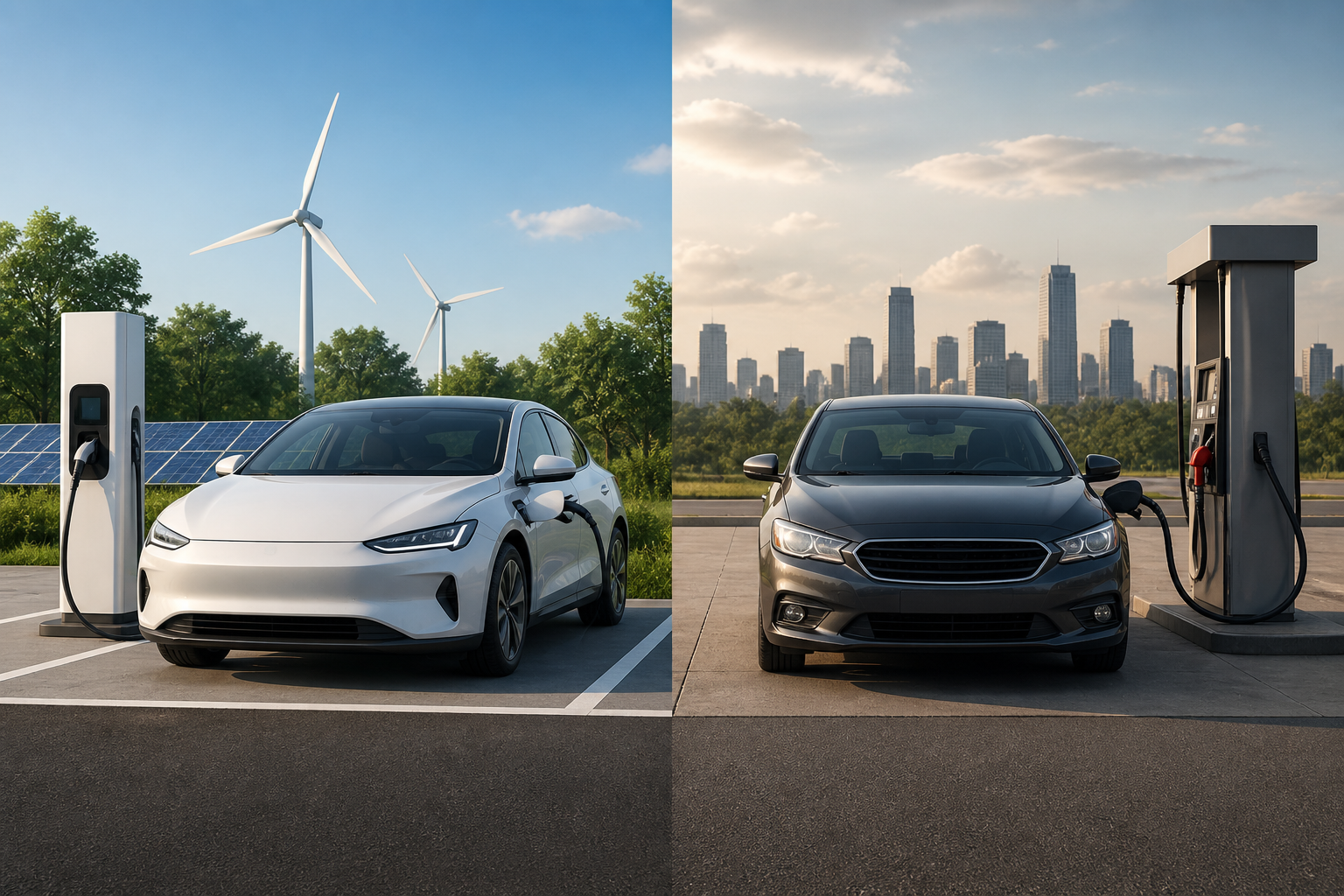
Imagine pulling up to a fuel station in 2026. Petrol prices hover around ₹110 per litre, and you watch the meter climb as your wallet gets lighter. Now picture plugging in your electric car at home, paying barely ₹1.5 per km. The choice between petrol and electric isn’t just about cars anymore — it’s about lifestyle, economics, and the future of mobility in India.
💸 Running Costs: The Silent Game-Changer
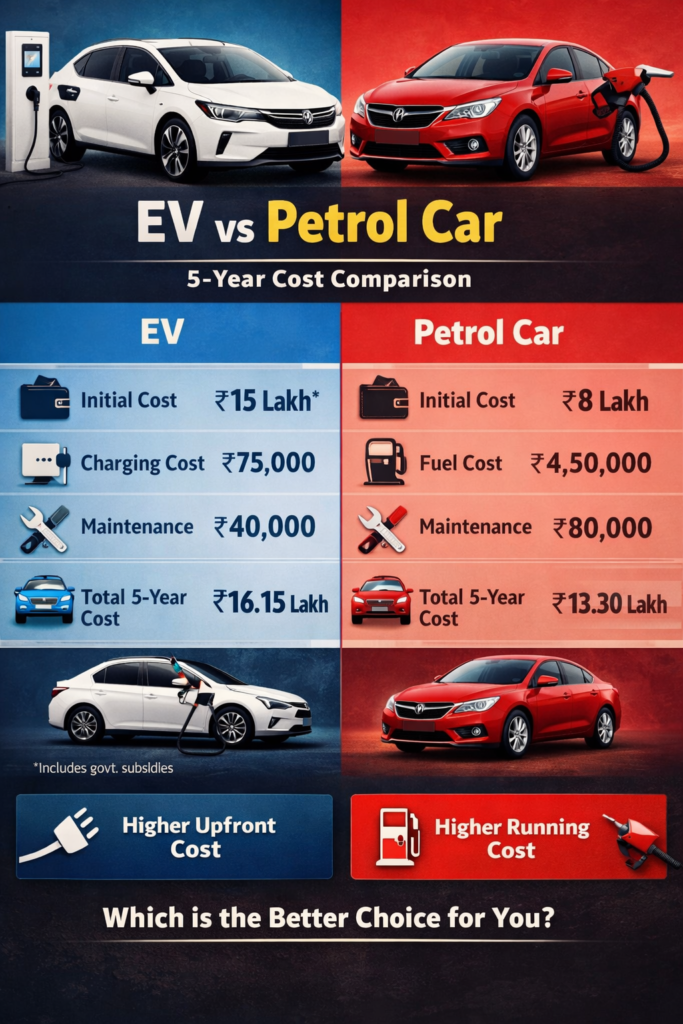
- Electric Cars (EVs): Charging an EV costs a fraction of petrol. A full charge for a Tata Nexon EV, for example, is around ₹300–₹400, giving 250–300 km of range. That’s less than ₹2 per km.
- Petrol Cars: A hatchback like the Maruti Swift averages ₹6–7 per km. Over five years, the difference can run into lakhs.
👉 Eye‑catching stat: An EV owner in Delhi saves nearly ₹1 lakh in fuel costs every 3 years compared to a petrol car.
5- Year cost Comparison
🛠️ Maintenance: Less Grease, More Peace
- EVs have fewer moving parts — no oil changes, no exhaust systems, no clutch.
- Petrol cars demand regular servicing: filters, spark plugs, fluids.
Result: EVs can cut maintenance bills by 30–40% over their lifetime.
🌍 Environment: Cleaner Streets, Clearer Skies
India’s cities rank among the most polluted globally. EVs produce zero tailpipe emissions, directly improving urban air quality. While electricity generation still relies on coal, the government’s push toward renewables means EVs will only get cleaner over time.
🚗 Convenience: The Infrastructure Puzzle
- EVs: Charging stations are growing — from 1,000 in 2021 to over 10,000 in 2026. Yet, rural areas still lag.
- Petrol Cars: Fuel stations are everywhere, offering unmatched convenience for long highway trips.
💰 Purchase Price: Sticker Shock vs Subsidies
- EVs are pricier upfront, but subsidies, lower GST, and reduced registration fees soften the blow.
- Petrol cars remain cheaper initially, with more variety across budgets.
🔮 The Future: Where India is Headed
- Government targets: 30% of new car sales to be electric by 2030.
- Automakers are investing heavily in EVs — from Tata to Hyundai to Mahindra.
- Petrol cars may face declining resale value as demand shifts.
🎯 Final Verdict
- Choose EVs if you live in a metro, want lower running costs, and care about sustainability.
- Stick with Petrol if you travel long distances, live in smaller towns, or want a lower upfront investment.
But here’s the truth: India is driving toward an electric future. Buying an EV today isn’t just about saving money — it’s about being part of the next big revolution in mobility.