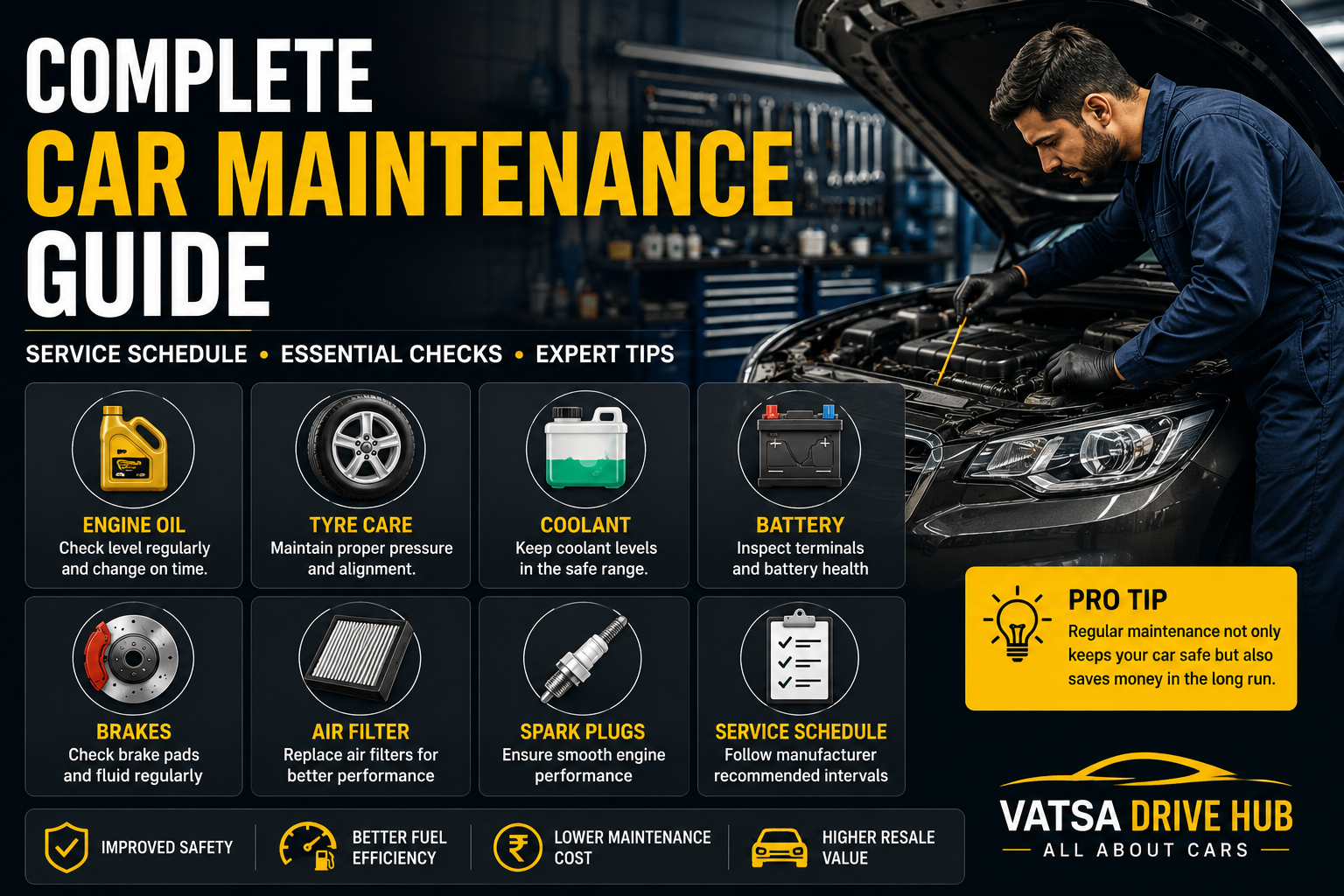
Complete Car Maintenance Guide – Service Schedule, Costs & Expert Tips. Learn how to maintain your car like a pro with this complete car maintenance guide. Discover service schedules, maintenance costs, engine care, tyre care, battery tips, and expert ownership advice for Indian drivers.
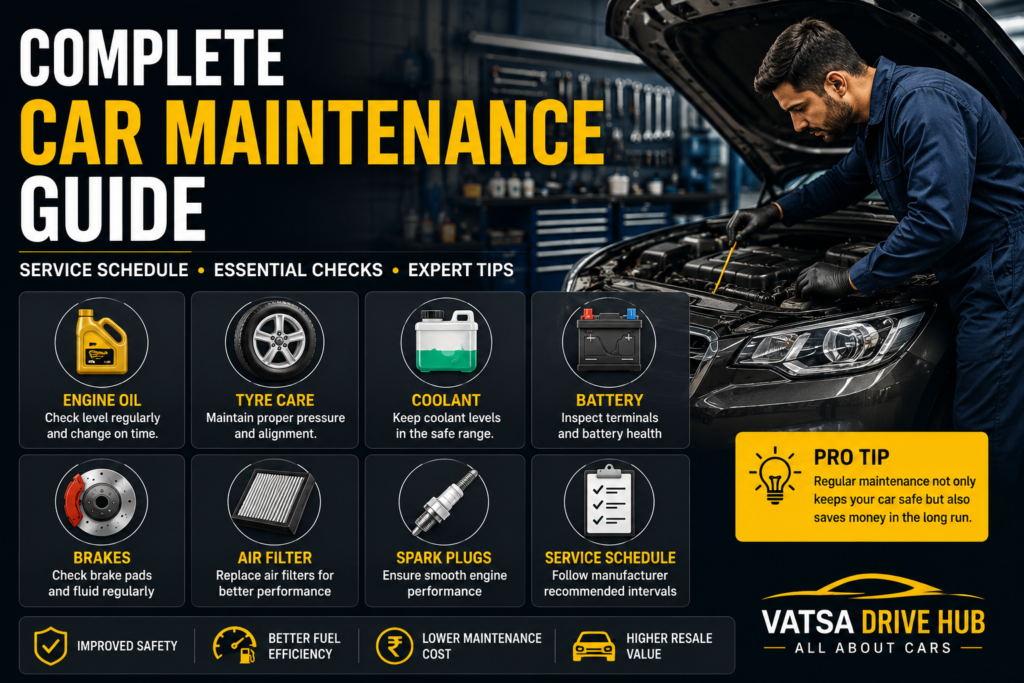
Buying a car is one of the biggest investments many people make after purchasing a home. Whether you own a hatchback, sedan, SUV, MPV, or luxury vehicle, regular maintenance is essential to ensure safety, reliability, fuel efficiency, and long-term performance.
Unfortunately, many car owners only visit a service center when something goes wrong. This approach often leads to expensive repairs that could have been prevented through routine inspections and timely maintenance.
A well-maintained vehicle not only performs better but also offers:
- Higher fuel efficiency
- Better reliability
- Lower repair costs
- Improved safety
- Better resale value
- Longer engine life
- More comfortable driving experience
In India, driving conditions can be demanding. Traffic congestion, potholes, dusty roads, steep hill routes, extreme temperatures, and monsoon conditions put additional stress on vehicle components. This makes preventive maintenance even more important.
This detailed guide explains everything you need to know about maintaining your car properly and avoiding unnecessary repair bills.
Why Car Maintenance Matters More Than Ever
Modern vehicles are more reliable than older cars, but they are also packed with advanced electronics, sensors, turbochargers, emission control systems, and safety features.
Neglecting routine maintenance can affect:
Fuel Economy
Dirty air filters, worn spark plugs, low tyre pressure, and old engine oil can significantly reduce mileage.
Safety
Brakes, tyres, suspension, and steering systems require regular inspection to ensure safe driving.
Performance
Poor maintenance often results in sluggish acceleration, increased vibrations, and rough engine operation.
Resale Value
A vehicle with complete service records usually attracts more buyers and commands a better resale price.
Understanding Car Service Intervals
Most manufacturers recommend servicing based on:
- Kilometers driven
- Time elapsed
- Driving conditions
Even if you drive less, fluids and components age over time.
Typical Service Schedule in India
| Maintenance Item | Recommended Interval |
|---|---|
| Engine Oil Check | Every Month |
| Tyre Pressure Check | Every 2 Weeks |
| Wheel Alignment | 5,000–10,000 km |
| Tyre Rotation | 8,000–10,000 km |
| Engine Oil Change | 10,000 km or 1 Year |
| Air Filter Inspection | 10,000 km |
| Brake Inspection | 10,000 km |
| Coolant Inspection | 20,000 km |
| Battery Check | Every 6 Months |
| Major Service | 20,000–40,000 km |
Complete Maintenance Schedule (0–100,000 km)
Following a long-term maintenance plan helps avoid major breakdowns.
0–10,000 km
During the first year:
Important Tasks
- Engine oil replacement
- Oil filter replacement
- Brake inspection
- Air filter inspection
- Fluid level check
- Tyre pressure inspection
Estimated Cost
₹3,000–₹8,000
depending on vehicle type and service center.
10,000–20,000 km
Recommended Checks
- Wheel balancing
- Wheel alignment
- Cabin air filter replacement
- Brake pad inspection
- Battery health check
Estimated Cost
₹5,000–₹12,000
20,000–40,000 km
This period usually includes a major service.
Service Items
- Engine oil
- Oil filter
- Air filter
- Fuel filter (diesel)
- Coolant inspection
- Brake fluid inspection
- Suspension check
Estimated Cost
₹8,000–₹20,000
40,000–60,000 km
Many wear-and-tear components start showing signs of aging.
Items to Inspect
- Brake pads
- Suspension bushings
- Tyres
- Battery
- Drive belts
Estimated Cost
₹10,000–₹25,000
60,000–100,000 km
This stage often requires major maintenance work.
Common Replacements
- Battery
- Shock absorbers
- Brake discs
- Coolant replacement
- Transmission fluid replacement
Estimated Cost
₹15,000–₹50,000+
depending on vehicle category.
Engine Maintenance Guide
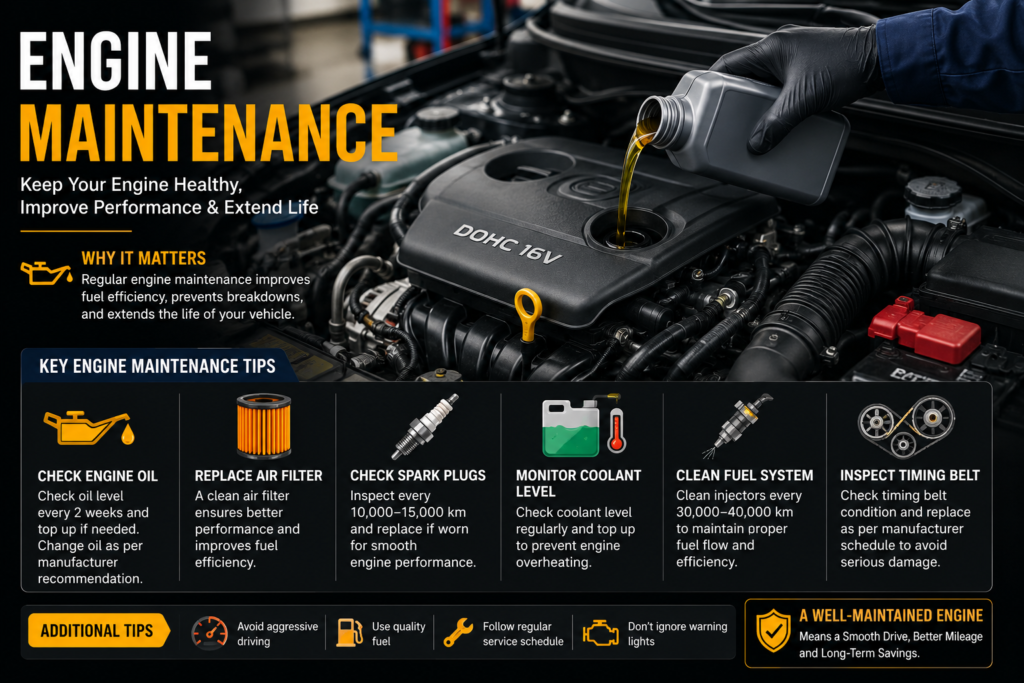
The engine is the heart of your vehicle. Proper care significantly increases reliability and lifespan.
Engine Oil: The Lifeblood of Your Engine
Engine oil lubricates moving components and minimizes friction.
Without proper lubrication:
- Internal wear increases
- Fuel efficiency drops
- Engine temperatures rise
- Performance suffers
How to Check Engine Oil
- Park on level ground.
- Turn off the engine.
- Wait 5–10 minutes.
- Pull out the dipstick.
- Wipe and reinsert.
- Check oil level markings.
The oil level should remain between minimum and maximum marks.
Signs Your Engine Oil Needs Replacement
Dark and Thick Oil
Fresh oil is generally amber-colored.
Increased Engine Noise
Metallic sounds may indicate inadequate lubrication.
Reduced Fuel Efficiency
Old oil creates additional engine resistance.
Warning Lights
Modern cars often display oil-related warnings.
Choosing the Correct Engine Oil
Always follow manufacturer recommendations.
Common grades include:
- 0W-20
- 5W-30
- 5W-40
- 10W-30
Using incorrect oil can negatively impact engine performance and warranty coverage.
Oil Filter Maintenance
Many owners focus on engine oil but ignore the oil filter.
The oil filter traps:
- Dirt
- Metal particles
- Carbon deposits
A clogged filter reduces lubrication effectiveness and increases wear.
Best Practice
Replace the oil filter with every oil change.
Air Filter Maintenance
The air filter prevents dust and debris from entering the engine.
This becomes especially important in Indian driving conditions where dust levels are often high.
Symptoms of a Dirty Air Filter
- Reduced power
- Sluggish acceleration
- Lower mileage
- Rough idling
Inspection Schedule
Normal Conditions
Every 10,000 km
Dusty Conditions
Every 5,000 km
Many filters can be cleaned once or twice before replacement.
Spark Plug Maintenance
Spark plugs ignite the fuel-air mixture inside petrol engines.
Worn spark plugs may cause:
- Misfires
- Poor mileage
- Starting difficulties
- Reduced performance
Replacement Interval
Most modern spark plugs last:
- Standard plugs: 20,000–30,000 km
- Iridium plugs: 60,000–100,000 km
Fuel System Maintenance
A clean fuel system helps maintain efficiency and performance.
Use High-Quality Fuel
Always choose reputable fuel stations.
Poor fuel quality may result in:
- Injector blockage
- Carbon buildup
- Engine knocking
Fuel Injector Cleaning
Injectors spray fuel into the combustion chamber.
Dirty injectors can cause:
- Rough idling
- Poor acceleration
- Reduced mileage
Professional cleaning every 30,000–40,000 km can improve engine performance.
Engine Cooling System Maintenance
Overheating remains one of the most common causes of severe engine damage.
The cooling system regulates engine temperature through:
- Coolant
- Radiator
- Water pump
- Thermostat
- Cooling fan
Warning Signs of Overheating
Temperature Gauge Rising
Never ignore a rising temperature needle.
Steam from Engine Bay
Stop immediately and inspect safely.
Coolant Leaks
Visible puddles often indicate cooling system issues.
Coolant Maintenance
Many drivers simply top up with water.
This is not recommended.
Quality coolant provides:
- Corrosion protection
- Better heat transfer
- Freeze protection
- Extended component life
Coolant Replacement Interval
Most manufacturers recommend replacement every:
- 40,000–60,000 km
or - 2–5 years
depending on coolant type.
Estimated Annual Maintenance Costs in India
| Vehicle Type | Annual Maintenance Cost |
|---|---|
| Hatchback | ₹4,000–₹12,000 |
| Compact Sedan | ₹5,000–₹15,000 |
| Compact SUV | ₹6,000–₹18,000 |
| Mid-Size SUV | ₹8,000–₹25,000 |
| Premium Car | ₹15,000–₹60,000+ |
Costs vary depending on usage, brand, location, and service center.
Expert Ownership Tips
After years of observing common ownership mistakes, certain habits consistently improve vehicle reliability:
Warm Up Gently
Avoid hard acceleration immediately after startup.
Don’t Ignore Warning Lights
A small issue today can become a major repair tomorrow.
Use Genuine Parts
Cheap aftermarket components often fail prematurely.
Maintain Proper Tyre Pressure
This simple habit improves mileage and tyre life.
Follow Service Intervals
Preventive maintenance is always cheaper than repairs.
Tyre Maintenance Guide: The Most Overlooked Safety Component
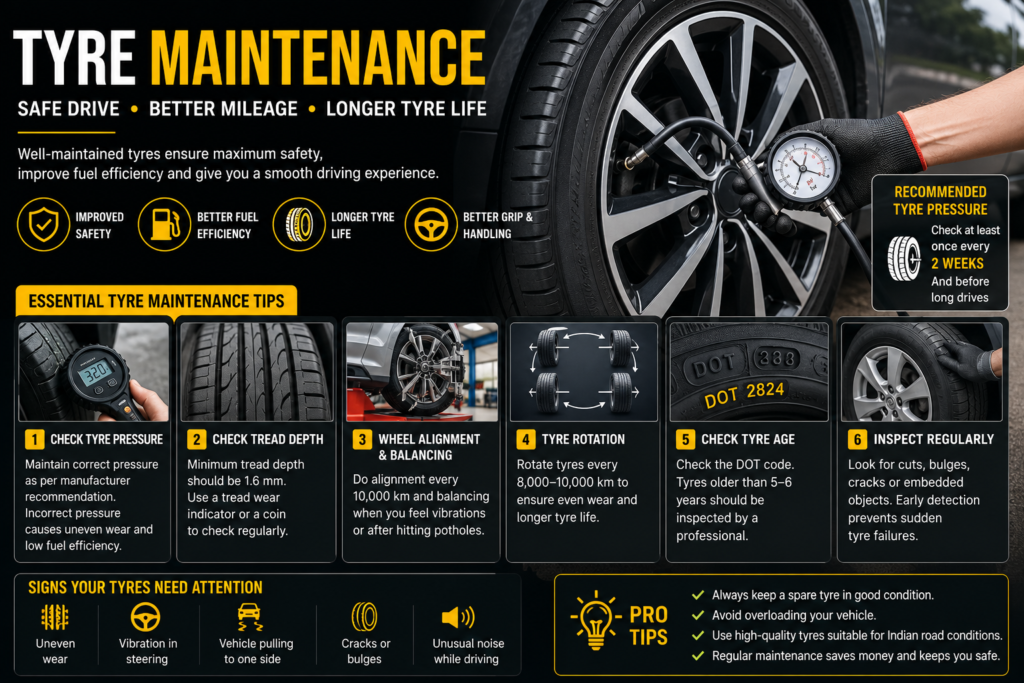
Tyres are the only point of contact between your car and the road. No matter how advanced your vehicle is, poor tyre condition can affect braking, handling, fuel efficiency, and overall safety.
Many Indian car owners replace tyres only when they become visibly worn out. However, proper tyre maintenance begins much earlier.
Check Tyre Pressure Regularly
Incorrect tyre pressure is one of the biggest reasons behind poor mileage and premature tyre wear.
Underinflated Tyres Can Cause:
- Reduced fuel efficiency
- Excessive heat buildup
- Increased tyre wear
- Poor handling
- Higher risk of tyre failure
Overinflated Tyres Can Cause:
- Reduced grip
- Uneven wear
- Harsher ride quality
- Reduced braking effectiveness
Recommended Inspection Frequency
Check tyre pressure every 2 weeks and before long journeys.
Always check pressure when tyres are cold.
Understanding Tyre Tread Depth
Tread grooves help channel water away from the tyre surface.
Low tread depth significantly increases the risk of hydroplaning during monsoon driving.
Signs Tyres Need Replacement
- Tread depth below legal limit
- Cracks on sidewalls
- Uneven wear
- Frequent punctures
- Tyres older than 5–6 years
Even if tread appears acceptable, old rubber hardens with age and loses grip.
Tyre Rotation
Front and rear tyres wear differently.
Rotating tyres ensures even wear and improves lifespan.
Recommended Interval
Every 8,000–10,000 km
Benefits include:
- Better tyre life
- Improved ride comfort
- Consistent handling
- Reduced replacement costs
Wheel Alignment and Balancing
Wheel Alignment
Misaligned wheels can cause:
- Steering pull
- Uneven tyre wear
- Reduced mileage
Wheel Balancing
Unbalanced wheels often create vibrations at highway speeds.
Recommended Interval
Every 5,000–10,000 km or after hitting a major pothole.
Brake Maintenance Guide
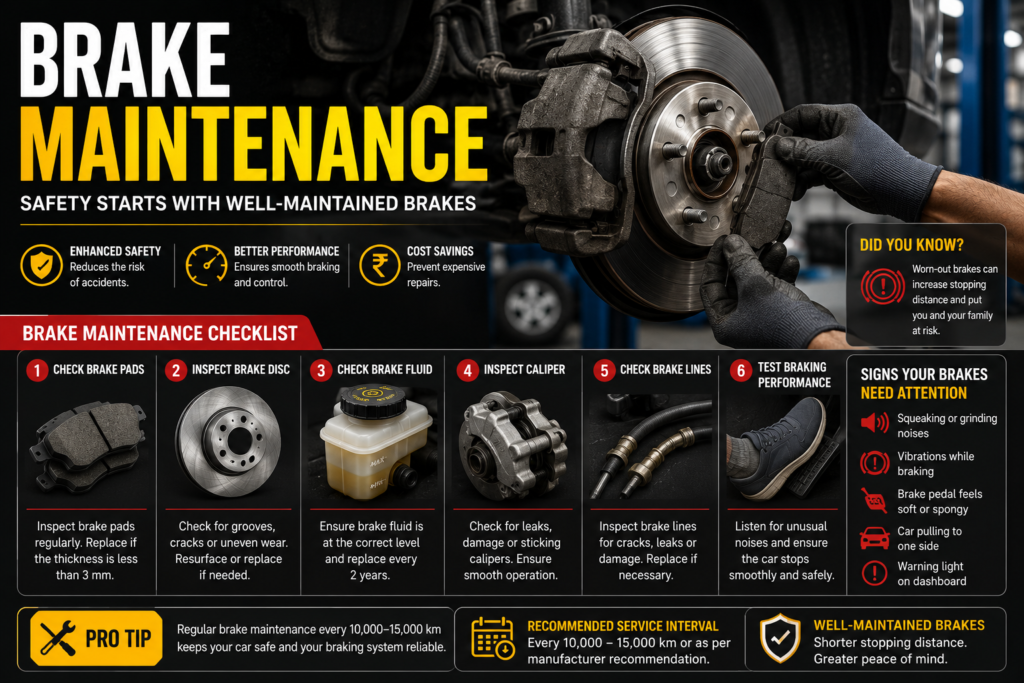
Brakes are your vehicle’s most important safety system.
Even the most powerful engine becomes dangerous if the braking system is neglected.
Components of the Braking System
A modern braking system typically includes:
- Brake pads
- Brake discs
- Brake calipers
- Brake fluid
- ABS components
Each component requires periodic inspection.
Signs Your Brakes Need Attention
Squealing Noises
Usually indicates worn brake pads.
Grinding Sounds
May suggest metal-to-metal contact.
Vibrations During Braking
Often caused by warped brake discs.
Increased Stopping Distance
Can indicate brake wear or fluid issues.
Soft Brake Pedal
May point to air or moisture in the braking system.
Brake Fluid Maintenance
Brake fluid absorbs moisture over time.
Excess moisture reduces braking efficiency.
Replacement Interval
Typically every 2–3 years.
Always use manufacturer-approved brake fluid.
ABS System Inspection
Anti-lock Braking System (ABS) improves vehicle control during emergency braking.
If the ABS warning light remains illuminated, have the system inspected immediately.
Suspension and Steering Maintenance
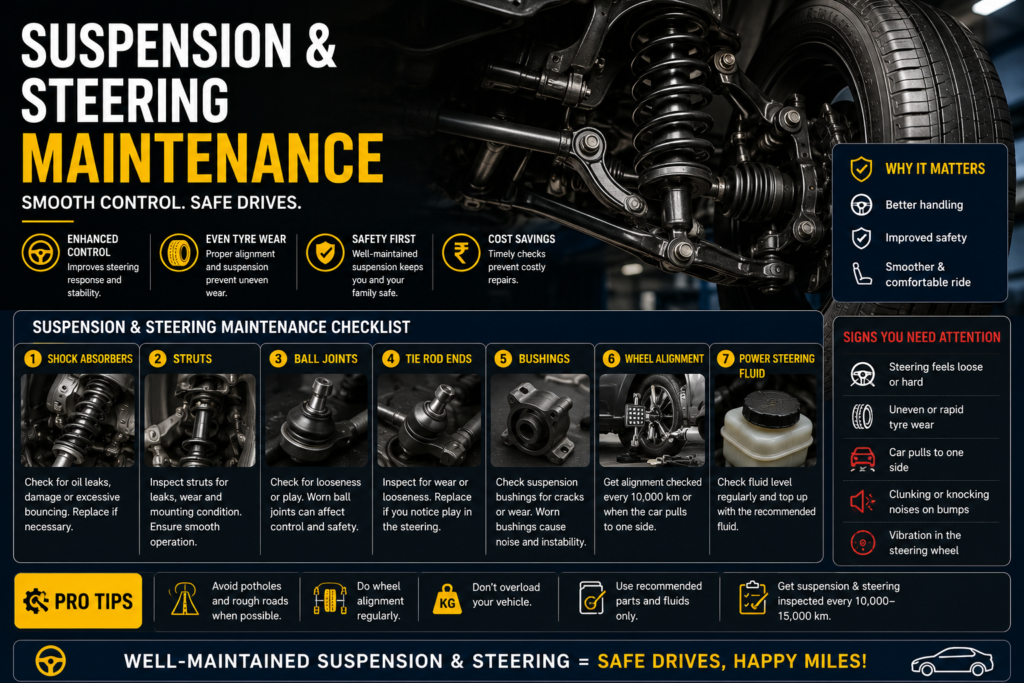
Indian roads can be challenging for suspension systems.
Potholes, speed breakers, and rough roads place constant stress on components.
Common Suspension Components
- Shock absorbers
- Struts
- Springs
- Bushings
- Ball joints
Warning Signs of Suspension Problems
Excessive Bouncing
Worn shock absorbers often cause repeated bouncing after bumps.
Uneven Tyre Wear
Suspension issues can affect wheel positioning.
Clunking Sounds
May indicate worn bushings or joints.
Poor Ride Comfort
A noticeable reduction in comfort often signals suspension wear.
Steering System Checks
Watch for:
- Steering vibrations
- Hard steering
- Fluid leaks (hydraulic systems)
- Unusual noises
Ignoring steering issues can compromise safety.
Battery Maintenance Guide
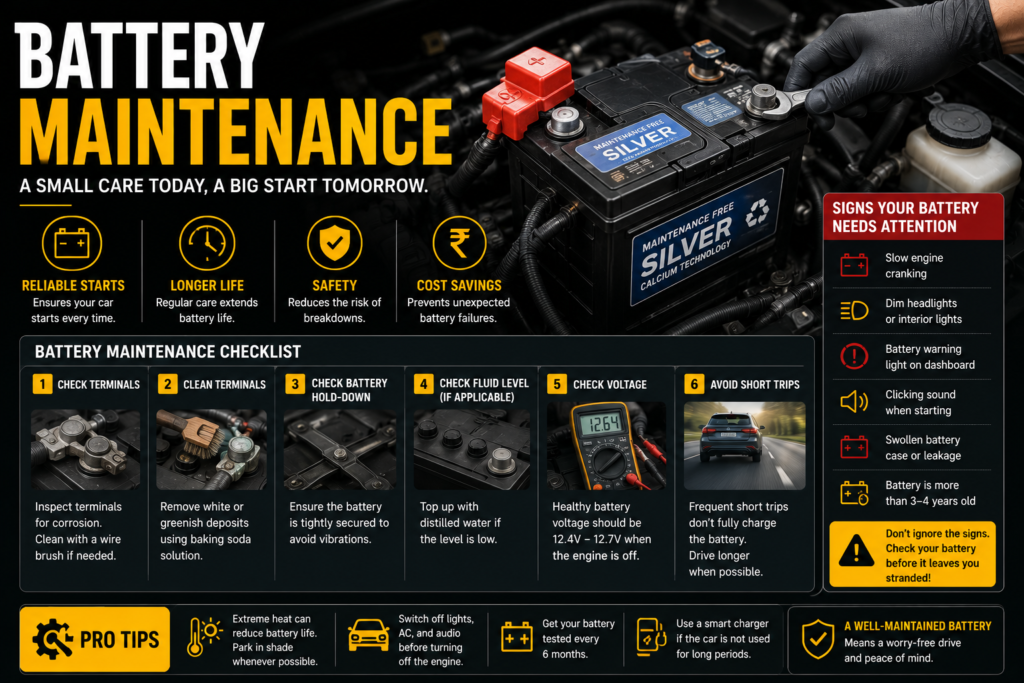
A healthy battery ensures reliable starting and powers electronic systems.
Modern vehicles depend heavily on battery performance.
Average Battery Life
Most batteries last:
- 3–5 years under normal conditions
Factors affecting lifespan include:
- Climate
- Driving habits
- Electrical load
- Maintenance practices
Signs of a Weak Battery
Slow Engine Cranking
The engine struggles to start.
Dim Headlights
Electrical output becomes inconsistent.
Warning Lights
Battery-related dashboard indicators appear.
Electrical Issues
Power windows and infotainment systems may behave erratically.
Battery Maintenance Tips
Clean Battery Terminals
Corrosion reduces electrical conductivity.
Secure Battery Mounting
Loose batteries suffer vibration damage.
Avoid Extended Vehicle Inactivity
Cars left unused for long periods can experience battery discharge.
Battery Replacement Cost in India
| Vehicle Segment | Estimated Cost |
|---|---|
| Hatchback | ₹3,000–₹6,000 |
| Sedan | ₹4,000–₹8,000 |
| SUV | ₹5,000–₹12,000 |
| Premium Vehicles | ₹10,000+ |
Transmission Maintenance Guide
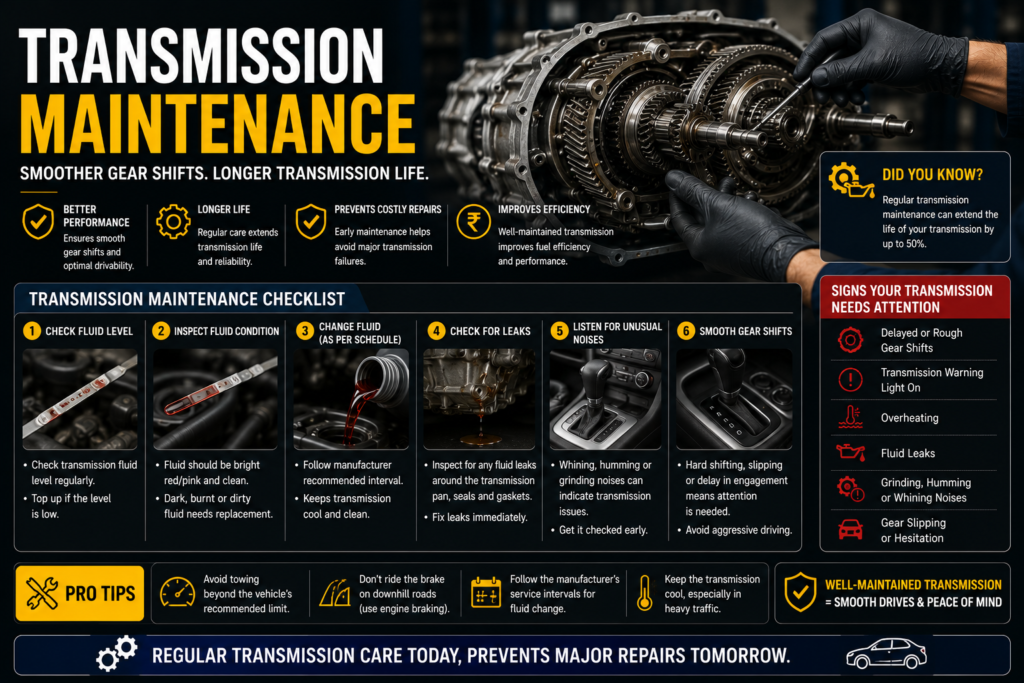
The transmission transfers engine power to the wheels.
Whether manual or automatic, proper maintenance is essential.
Manual Transmission Care
Avoid Riding the Clutch
Keeping your foot on the clutch pedal causes premature wear.
Shift Smoothly
Aggressive shifting stresses transmission components.
Replace Gear Oil
Follow manufacturer-recommended intervals.
Automatic Transmission Care
Automatic gearboxes are more complex and expensive to repair.
Symptoms of Transmission Problems
- Delayed shifts
- Gear slipping
- Jerking
- Warning lights
- Fluid leaks
Transmission Fluid Replacement
Many manufacturers recommend replacement between:
40,000–80,000 km
Ignoring fluid replacement can significantly shorten transmission life.
Air Conditioning (AC) Maintenance
A properly functioning AC system improves comfort and visibility.
Common AC Problems
Weak Cooling
May indicate low refrigerant levels.
Bad Odor
Usually caused by mold growth.
Reduced Airflow
Often linked to a clogged cabin filter.
Cabin Air Filter Maintenance
The cabin filter prevents dust and pollutants from entering the interior.
Replacement Interval
Every 10,000–15,000 km
More frequently in dusty environments.
Petrol vs Diesel Maintenance Comparison
Many buyers consider maintenance costs when choosing between petrol and diesel vehicles.
Petrol Cars
Advantages
- Lower maintenance costs
- Quieter operation
- Lower service expenses
Disadvantages
- Lower fuel efficiency
- Higher fuel expenses for high-mileage users
Diesel Cars
Advantages
- Better fuel economy
- Higher torque output
Disadvantages
- More expensive maintenance
- Additional emission-control components
Typical Long-Term Maintenance Costs
| Category | Petrol | Diesel |
|---|---|---|
| Engine Maintenance | Lower | Higher |
| Fuel System Repairs | Lower | Higher |
| Oil Change Cost | Lower | Higher |
| Injector Replacement | Lower | Higher |
For low annual running, petrol vehicles often prove more economical.
Electric Vehicle (EV) Maintenance Guide
EVs generally require less maintenance than conventional vehicles.
However, maintenance is still necessary.
Components Requiring Attention
Tyres
EVs are heavier than many conventional cars.
Brakes
Regenerative braking reduces wear but inspections remain important.
Cooling Systems
Battery thermal management systems require periodic checks.
Software Updates
Modern EVs often receive updates that improve performance and efficiency.
Components Not Required
Unlike petrol and diesel vehicles, EVs do not require:
- Engine oil changes
- Spark plug replacement
- Fuel filter replacement
Long-Term EV Ownership Tips
- Avoid frequent 0–100% charging cycles.
- Follow manufacturer charging recommendations.
- Use approved charging equipment.
Common Maintenance Mistakes Car Owners Make
Avoiding these mistakes can save significant money.
Ignoring Dashboard Warning Lights
Warning lights exist to prevent larger problems.
Delaying Service Appointments
Postponed maintenance often results in expensive repairs.
Using Incorrect Fluids
Always follow manufacturer specifications.
Neglecting Tyre Pressure
This affects both safety and fuel economy.
Skipping Wheel Alignment
Misalignment accelerates tyre wear.
Using Low-Quality Parts
Cheap parts frequently fail earlier and may damage related systems.
Used Car Maintenance Checklist
If purchasing a used vehicle, inspect the following:
Engine
- Oil leaks
- Excessive smoke
- Unusual noises
Tyres
- Uneven wear
- Manufacturing date
Brakes
- Pad thickness
- Brake response
Suspension
- Clunking sounds
- Ride quality
Service Records
A complete maintenance history is a valuable indicator of vehicle care.
Battery
Check age and health status.
Electronics
Verify all electrical systems function properly.
Troubleshooting Guide
| Symptom | Possible Cause |
|---|---|
| Poor Mileage | Low tyre pressure, dirty air filter |
| Hard Starting | Weak battery, fuel system issue |
| Overheating | Low coolant, radiator issue |
| Steering Pull | Wheel alignment problem |
| Vibrations | Wheel balancing issue |
| Brake Noise | Worn brake pads |
| AC Not Cooling | Low refrigerant |
| Rough Idle | Dirty injectors, air filter |
Expert Maintenance Tips for Long-Term Ownership
Drive Smoothly
Aggressive driving accelerates wear.
Keep Records
Maintain service invoices and repair history.
Use Genuine Parts
OEM parts generally provide better reliability.
Wash Your Car Regularly
Protects paint and underbody components.
Inspect Fluids Monthly
A five-minute inspection can prevent major repairs.
Address Small Issues Early
Minor problems are usually cheaper to fix.
Frequently Asked Questions (FAQs)
1. How often should I service my car in India?
Most manufacturers recommend servicing your car every 10,000 km or 12 months, whichever comes first. However, vehicles driven in heavy traffic, dusty environments, or hilly regions may require more frequent inspections.
2. How often should engine oil be changed?
For most modern petrol and diesel cars, engine oil should be replaced every 10,000–15,000 km. Always follow the interval mentioned in your owner’s manual.
3. What happens if I skip a scheduled service?
Skipping scheduled maintenance can lead to:
- Reduced fuel efficiency
- Faster component wear
- Increased repair costs
- Potential warranty issues
- Lower resale value
Regular servicing helps identify small issues before they become expensive repairs.
4. How can I improve my car’s fuel efficiency?
You can improve fuel economy by:
- Maintaining proper tyre pressure
- Replacing air filters on time
- Using quality fuel
- Avoiding aggressive acceleration
- Following service schedules
- Keeping engine oil fresh
5. How long do car tyres typically last?
Most car tyres last between 40,000 and 60,000 km, depending on driving habits, road conditions, tyre quality, and maintenance practices.
6. How often should wheel alignment be performed?
Wheel alignment should generally be checked every 5,000–10,000 km or whenever you notice uneven tyre wear, steering pull, or after hitting a large pothole.
7. What are the signs of a weak car battery?
Common signs include:
- Slow engine cranking
- Dim headlights
- Electrical malfunctions
- Dashboard battery warning light
- Difficulty starting the vehicle
8. How long does a car battery last?
A typical car battery lasts 3–5 years, though extreme temperatures and driving habits can affect lifespan.
9. Is premium fuel necessary for all cars?
No. Most cars are designed to run efficiently on the fuel grade recommended by the manufacturer. Using premium fuel in a vehicle that doesn’t require it usually provides little benefit.
10. How often should brake fluid be replaced?
Brake fluid is typically replaced every 2–3 years or according to the manufacturer’s service schedule.
11. Why is tyre pressure important?
Proper tyre pressure:
- Improves fuel economy
- Enhances handling
- Reduces tyre wear
- Improves braking performance
- Increases tyre lifespan
12. What should I check before a long road trip?
Before any long journey, inspect:
- Engine oil
- Coolant
- Tyre pressure
- Spare wheel
- Brake condition
- Battery health
- Lights and indicators
- Windshield washer fluid
13. Can regular maintenance increase resale value?
Yes. A vehicle with complete service records and proper maintenance history generally achieves a higher resale price and attracts more buyers.
14. How often should coolant be replaced?
Most manufacturers recommend coolant replacement every 40,000–60,000 km or every 2–5 years, depending on coolant type.
15. What are the most expensive repairs caused by poor maintenance?
Neglected maintenance can result in:
- Engine failure
- Transmission damage
- Turbocharger failure
- Head gasket damage
- Suspension replacement
- Cooling system failure
These repairs can cost significantly more than routine servicing.
16. Do electric vehicles require maintenance?
Yes. While EVs eliminate engine oil changes and several traditional maintenance tasks, they still require:
- Tyre inspections
- Brake maintenance
- Suspension checks
- Battery cooling system inspections
- Software updates
17. What is the ideal tyre pressure for my car?
Always follow the tyre pressure recommendation provided by the manufacturer, usually found on the driver’s door frame or owner’s manual.
18. How often should the air filter be replaced?
Air filters generally require replacement every 10,000–15,000 km, though dusty conditions may require earlier replacement.
19. What maintenance tasks can I perform at home?
Many basic checks can be performed without professional assistance:
- Tyre pressure inspection
- Engine oil level check
- Coolant level check
- Battery terminal inspection
- Windshield washer fluid refill
- Exterior light inspection
20. What is the single most important maintenance habit?
Following the manufacturer’s service schedule consistently is the most effective way to improve reliability, safety, and long-term ownership satisfaction.
Hyundai i20 review – Click Here
Suzuki Grand Vitara Review – Click Here
Vehicle Safety Standards – Click Here