The Hyundai Creta has been a defining model in the compact SUV segment since its launch. It balances everyday practicality with enough style and technology to satisfy families and young professionals alike. Over successive updates the Creta has broadened its appeal by adding more powertrain choices, richer feature sets on higher trims, and advanced driver assistance systems. This long‑form guide walks through everything a prospective buyer needs to know before choosing a Creta in 2026, from which engine suits your needs to ownership costs and real‑world tips for test drives and negotiation.
Design and Interior
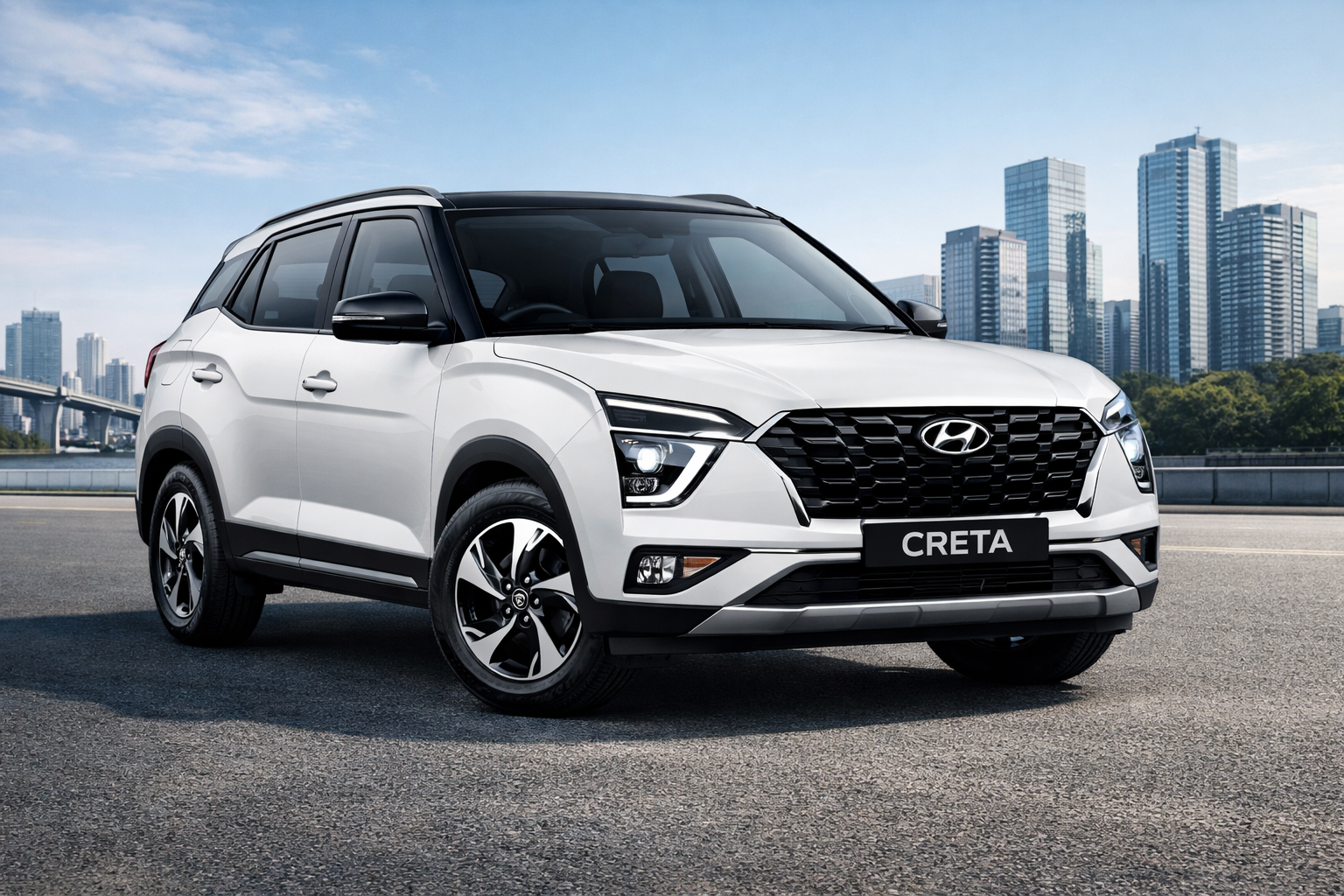
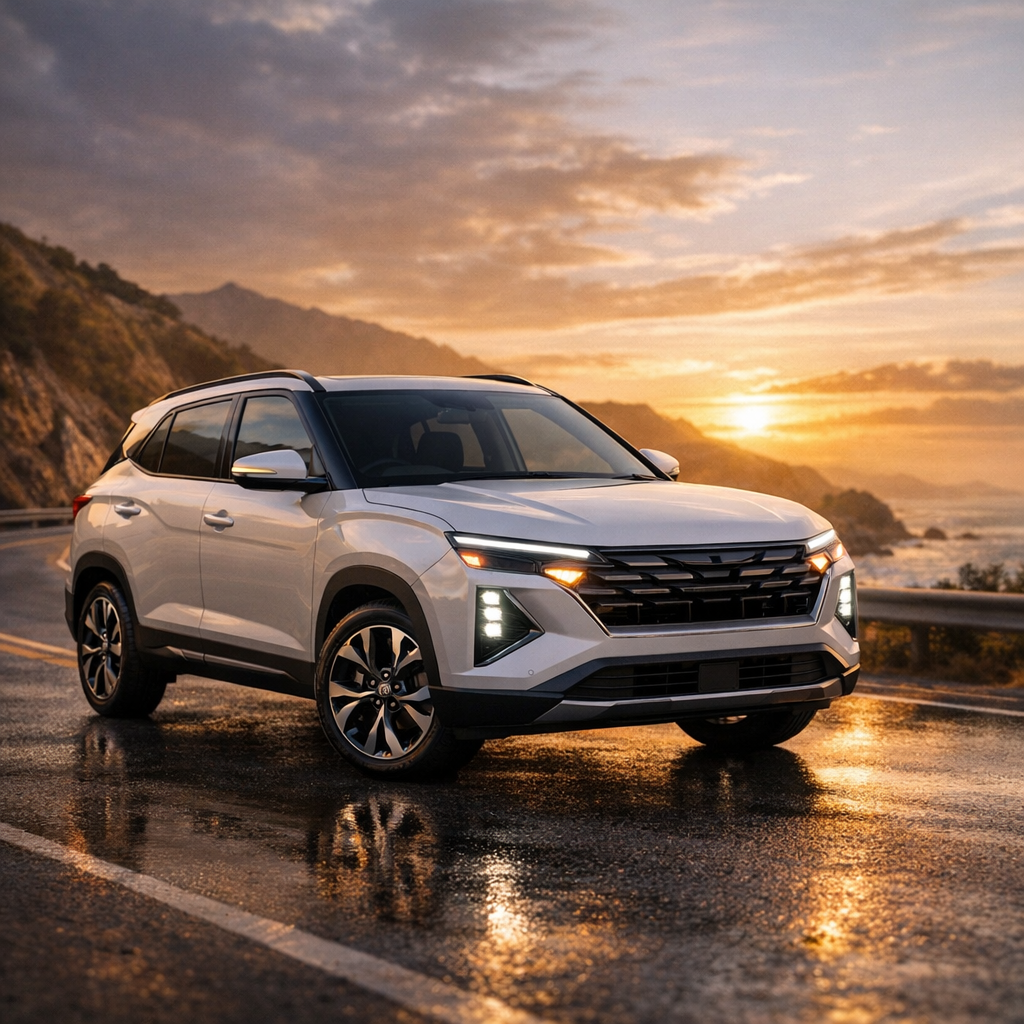
Exterior design The Creta’s exterior language blends Hyundai’s parametric styling cues with SUV proportions that read modern without being polarizing. The front fascia typically features a bold grille treatment and full‑LED lighting on higher trims. Side profiles emphasize a high beltline and sculpted panels that hide bulk while giving the car a planted stance. Alloy wheel sizes and finishes vary by trim, with the top variants sporting larger, diamond‑cut wheels that add visual presence.
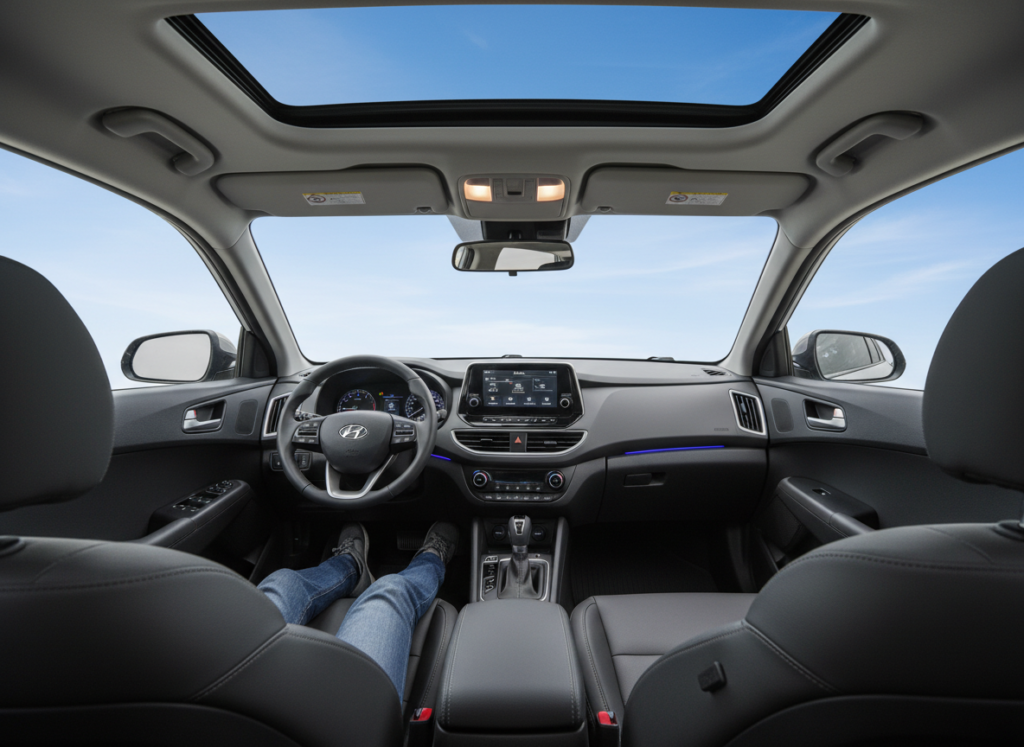
Cabin and ergonomics Inside, the Creta aims for a near‑premium feel in its segment. Materials quality improves as you move up the range: soft‑touch surfaces, stitched dash trims, and contrast piping on seats appear on mid and top trims. The driver’s seating position is upright and commanding, with good visibility and a logical control layout. Higher trims add electrically adjustable driver seats, ventilated front seats, and a panoramic sunroof that opens the cabin up for families and long drives.
Practicality Boot space is competitive for the class and the rear seat offers adequate legroom for two adults on long journeys. Storage cubbies, cupholders, and a usable glovebox make daily life easier. Rear passengers benefit from adjustable AC vents and, on some trims, USB charging points.
Fit and finish Hyundai’s build quality is generally consistent; fit and finish are strong for the segment. Expect tight panel gaps and durable switchgear that stands up to family use.
Performance and Powertrains
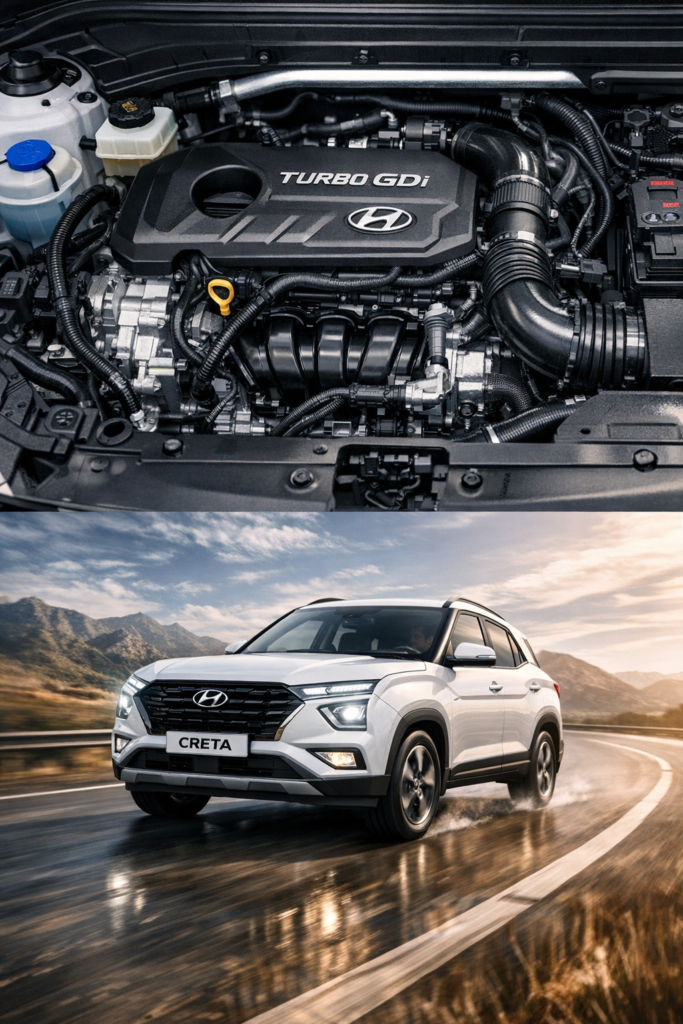
Choosing the right Creta engine is the single most important decision for ownership satisfaction. Hyundai offers multiple engines and transmissions to match different driving patterns.
| Engine | Power and Torque | Transmission options | Best for |
|---|---|---|---|
| Naturally aspirated 1.5 petrol | Moderate power; smooth delivery | 6‑MT; IVT | City driving; low running cost |
| 1.5 turbo petrol | Strong midrange; brisk acceleration | 7‑DCT; 6‑MT (where offered) | Highway overtakes; enthusiastic driving |
| 1.5 diesel | High torque at low revs | 6‑MT; 6‑AT | Long distances; heavy loads |
| 1.5 strong hybrid | Combined petrol+electric output; best city economy | e‑CVT | Stop‑start city traffic; best fuel efficiency |
How they feel on the road
- 1.5 petrol (NA): Predictable and refined, this engine is the easiest to live with for daily commuting. It’s not sporty but is smooth and economical.
- 1.5 turbo: The turbocharged petrol is the pick for drivers who want lively performance. Paired with a dual‑clutch transmission, it delivers quick responses and confident overtakes. Expect sharper throttle response and a more engaging drive.
- Diesel: If you cover long distances regularly or carry heavy loads, the diesel’s torque makes highway cruising effortless and overtaking simple. Diesel ownership still makes sense for high‑milers.
- Hybrid: The strong hybrid is tuned for urban efficiency. It offers silent starts, frequent electric‑assist boosts, and the best real‑world fuel economy in city conditions.
Transmission notes
- IVT / e‑CVT: Smooth and efficient for city use but can feel less direct under hard acceleration.
- 7‑DCT: Offers sportier shifts and better performance but can show low‑speed jerkiness in heavy traffic on some setups. Test this in stop‑start conditions.
- 6‑AT: A reliable automatic for diesel variants with predictable behavior on highways.
Safety and Technology
Active and passive safety Hyundai equips the Creta with a comprehensive safety package across the range. Expect multiple airbags, ABS with EBD, electronic stability control, and hill‑start assist as standard on most trims. Higher trims add parking sensors, a 360‑degree camera, and more advanced braking aids.
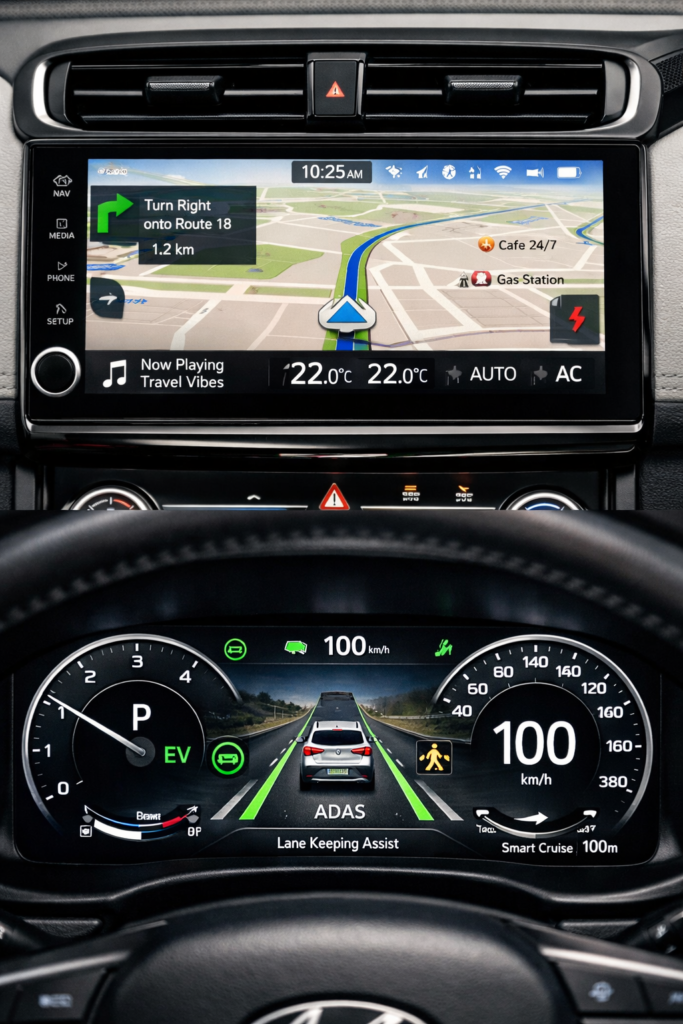
ADAS and driver aids Recent updates have introduced Level‑2 driver assistance features on upper trims. These typically include adaptive cruise control, lane‑keep assist, automatic emergency braking, and blind‑spot monitoring. While these systems add convenience and safety, they are not substitutes for attentive driving. Confirm the exact ADAS features on the specific trim you test.
Infotainment and connectivity The Creta’s infotainment system is a highlight for many buyers. Large touchscreens, wireless smartphone mirroring, connected‑car features, and premium audio options are available depending on the variant. The user interface is generally intuitive and responsive on higher trims.
Child safety and family features ISOFIX anchors, rear door child locks, and adequate rear visibility make the Creta family‑friendly. If you frequently carry children, prioritize trims with rear AC vents and additional USB ports.
Ownership Running Costs and Practical Considerations
Fuel economy and real‑world running costs Fuel efficiency varies widely by powertrain and driving style. Naturally aspirated petrol engines are economical for mixed driving. Diesels return the best long‑distance economy. Hybrids deliver the best city figures when traffic conditions allow regenerative braking to work effectively. Always compare manufacturer figures with real‑world user reports for the most realistic expectations.
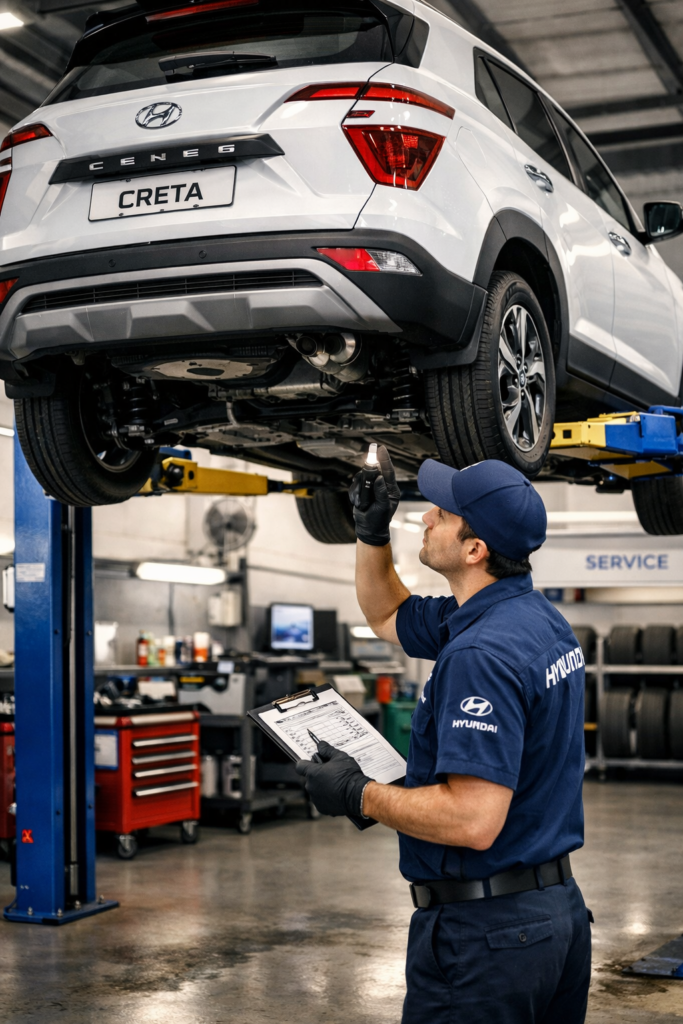
Maintenance and service network Hyundai’s service network is extensive in urban and semi‑urban areas. Routine maintenance costs are competitive for the segment. Consider buying a prepaid service plan or extended warranty if you plan to keep the car beyond the manufacturer warranty period.
Insurance and depreciation Higher trims with more features and ADAS attract higher insurance premiums. The Creta holds resale value well relative to many rivals, but depreciation accelerates with very high mileage or poor service history. Keep service records and avoid aftermarket modifications that can reduce resale appeal.
Practical ownership tips
- Extended warranty: Good value if you plan to keep the car long term.
- Service packs: Prepaid maintenance can reduce long‑term costs and simplify budgeting.
- Tyre choice: Upgrade tyres only to sizes recommended by Hyundai to avoid speedometer and ride issues.
- Accessory caution: Fit only dealer‑approved accessories to preserve warranty and resale value.
Buying Guide Test Drive Checklist and Final Verdict
How to choose by use case
- City commuter: Choose the hybrid or the naturally aspirated petrol with IVT for smooth, economical urban driving.
- Highway cruiser: Diesel or turbo petrol with an automatic transmission offers the best balance of comfort and overtaking ability.
- Performance and fun: The turbo petrol with a dual‑clutch transmission is the most engaging option.
- Feature seeker: Top trims deliver ADAS, premium audio, ventilated seats, and panoramic sunroof. Decide which features you truly need before stretching to the highest price bracket.
Test‑drive checklist
- Low‑speed behavior: Check DCT or CVT smoothness in traffic.
- Highway stability: Test at legal speeds to assess NVH and composure.
- ADAS behavior: Try adaptive cruise and lane‑keep on a quiet road to understand limits.
- Comfort: Spend at least 30 minutes in the cabin to evaluate seat comfort and ergonomics.
- Boot and rear space: Load luggage and sit in the rear to confirm space for passengers.
Negotiation and purchase tips
- Compare on‑road prices from multiple dealers and ask for available exchange or corporate discounts.
- Time purchases around festival or model‑year change periods for better offers.
- Factor in registration, insurance, and accessories when comparing on‑road costs.
Final verdict The Hyundai Creta remains a compelling choice in 2026 because it blends practicality, technology, and a wide choice of powertrains that let buyers tailor the car to their needs. If you want a comfortable family SUV with modern safety tech and a strong dealer network, the Creta is hard to beat. Choose the engine and trim that match your daily routine rather than the one that looks best on paper. A careful test drive and a clear list of must‑have features will ensure you pick the Creta variant that delivers the most satisfaction over years of ownership.