Volkswagen Virtus– Price, Mileage, Features, Safety & Performance
Read the complete Volkswagen Virtus 2026 review with price, variants, mileage, engine specs, safety features, interior quality, GT performance, rivals comparison, pros & cons, and FAQ schema markup.

Virtus 2026
In a market filled with SUVs, the Volkswagen Virtus proves that sedans are far from dead. While many buyers are shifting toward compact and mid-size SUVs, there is still a strong audience that values driving comfort, highway stability, premium interiors, and sporty handling. That is exactly where the Virtus shines.
Volkswagen designed the Virtus for people who enjoy driving but also want practicality for daily family use. It combines German engineering, solid build quality, modern technology, and impressive turbo petrol engines into one stylish package.
The Virtus competes against popular sedans like the Honda City, Hyundai Verna, and Skoda Slavia. However, what makes the Virtus stand out is its balance between performance and sophistication.
In this detailed review, we will explore everything about the Volkswagen Virtus including design, engine options, mileage, features, safety, ride quality, variants, pricing, ownership experience, and whether it is worth buying in 2026.
Volkswagen Virtus Exterior Design
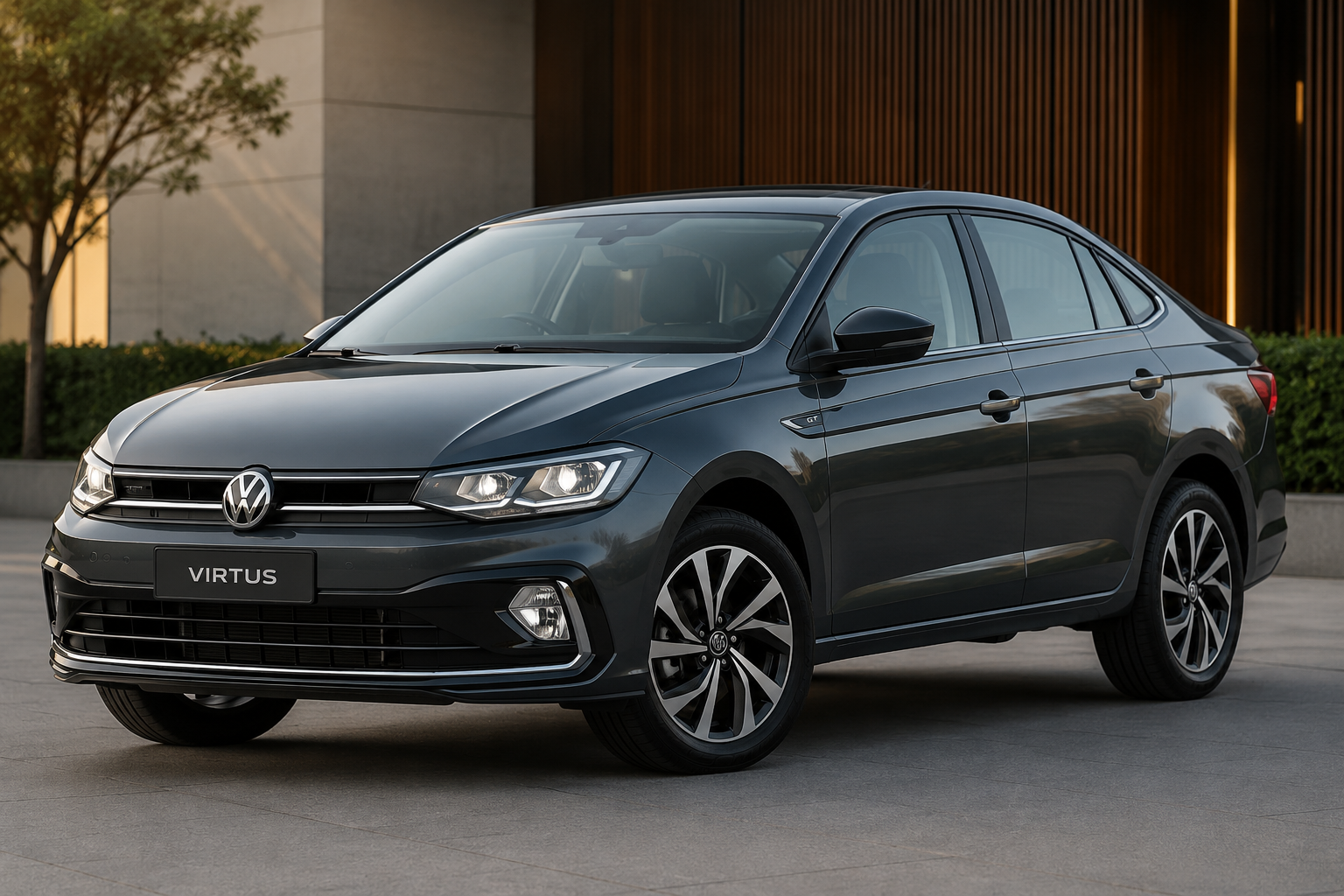
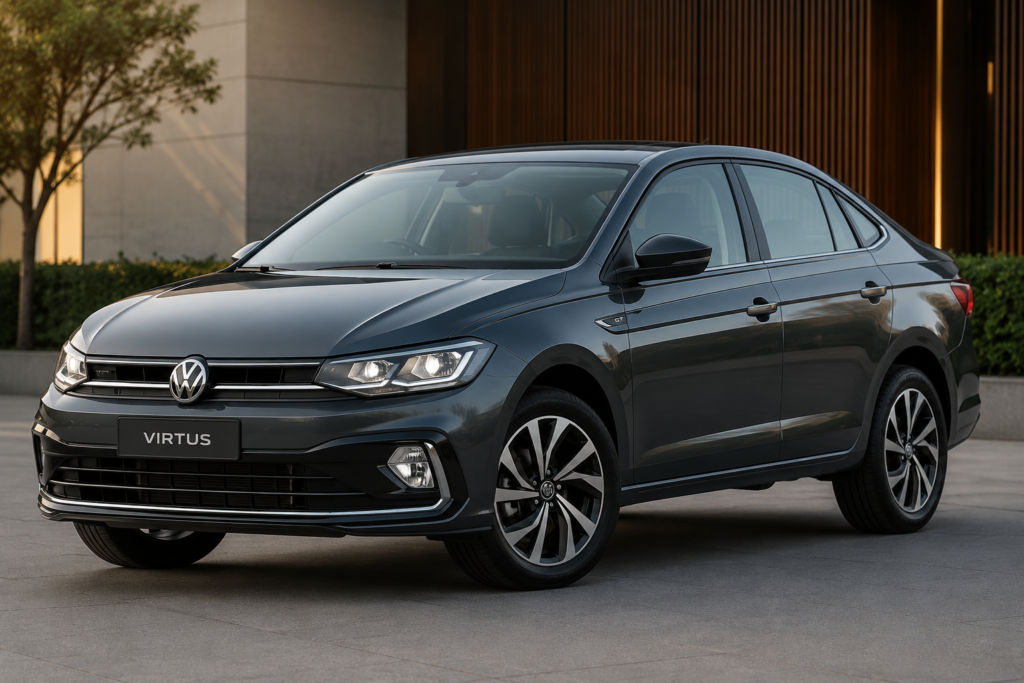
The Virtus carries a clean and mature European design language. Unlike some modern cars that use aggressive styling everywhere, the Virtus focuses on elegance and proportion.
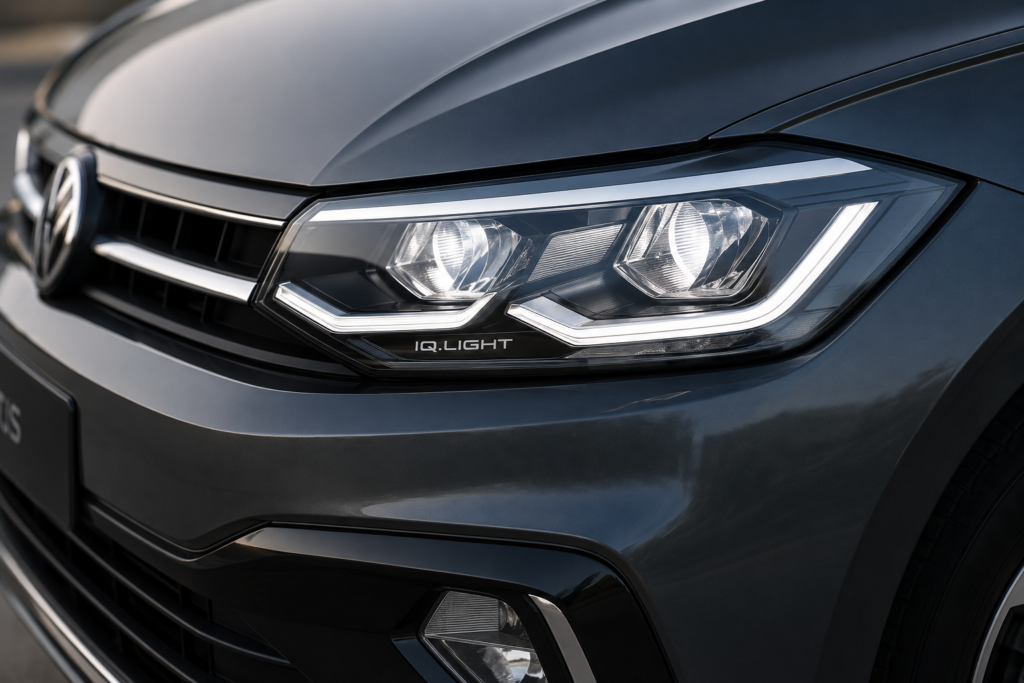
The front features sleek LED headlamps connected with chrome detailing that gives the sedan a premium appearance. The wide grille and sharp bumper design add road presence without looking overdone.
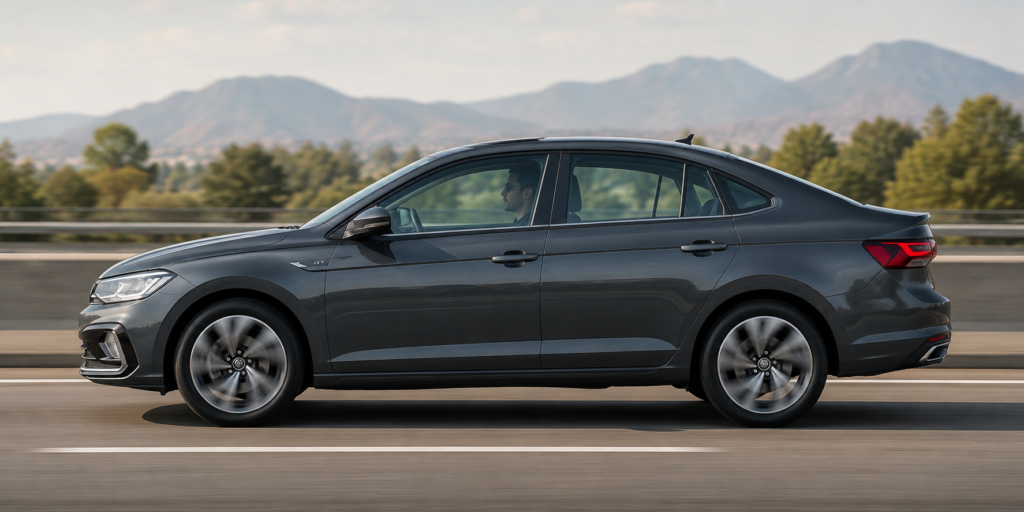
From the side, the long wheelbase gives the car a classy silhouette. The coupe-like roofline flows smoothly toward the rear section, making the sedan look sporty and balanced.
At the rear, the LED tail lamps and subtle chrome touches create a sophisticated finish. Volkswagen has managed to keep the design timeless, which means the Virtus will likely age well even after several years.
Interior and Cabin Experience
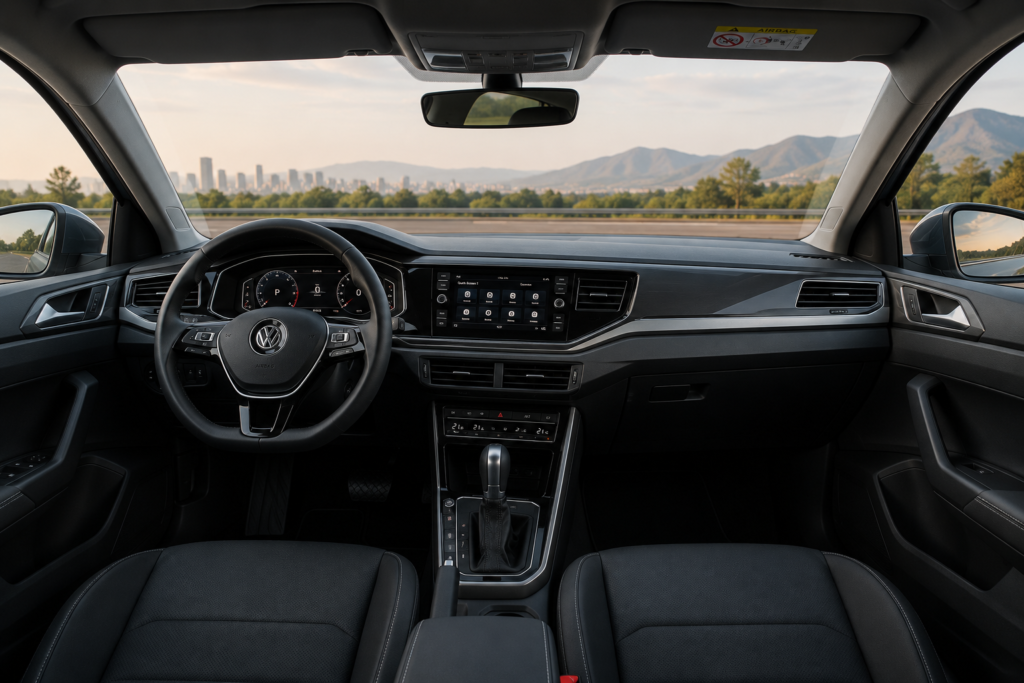
Step inside the Virtus and the cabin immediately feels premium. The dashboard layout is simple, driver-focused, and modern. Volkswagen has used soft-touch materials in several areas, and the overall fit and finish feels solid.
One of the strongest points of the Virtus is space. The sedan offers excellent legroom and knee room, especially for rear passengers. Tall passengers can comfortably sit in the back without feeling cramped.
The seats are supportive and comfortable for long-distance drives. The GT variants add sporty touches like red accents, aluminum pedals, and contrast stitching.
The large boot space also makes the Virtus practical for family trips and airport runs.
Infotainment and Technology Features
Volkswagen has equipped the Virtus with a good list of modern features. The infotainment system is responsive and easy to use.
Key Features Include:
- 10-inch touchscreen infotainment system
- Wireless Android Auto and Apple CarPlay
- Digital instrument cluster
- Ventilated front seats
- Automatic climate control
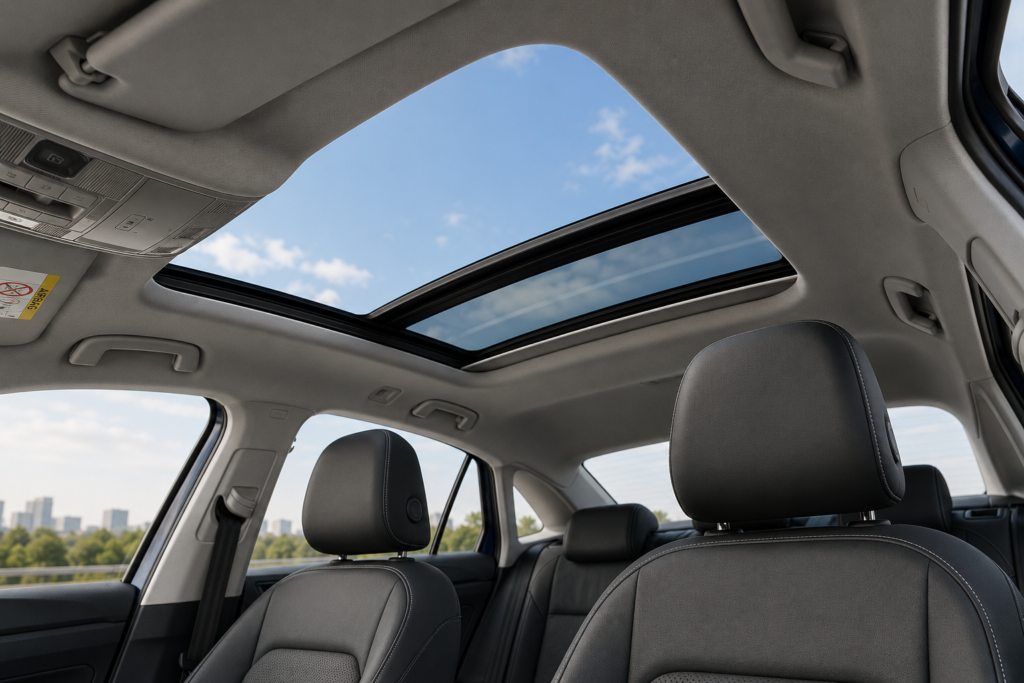
- Electric sunroof
- Wireless charger
- Push-button start
- Connected car technology
- Premium sound system in higher variants
The digital cockpit especially gives the Virtus a modern premium feel.
Engine Options and Performance
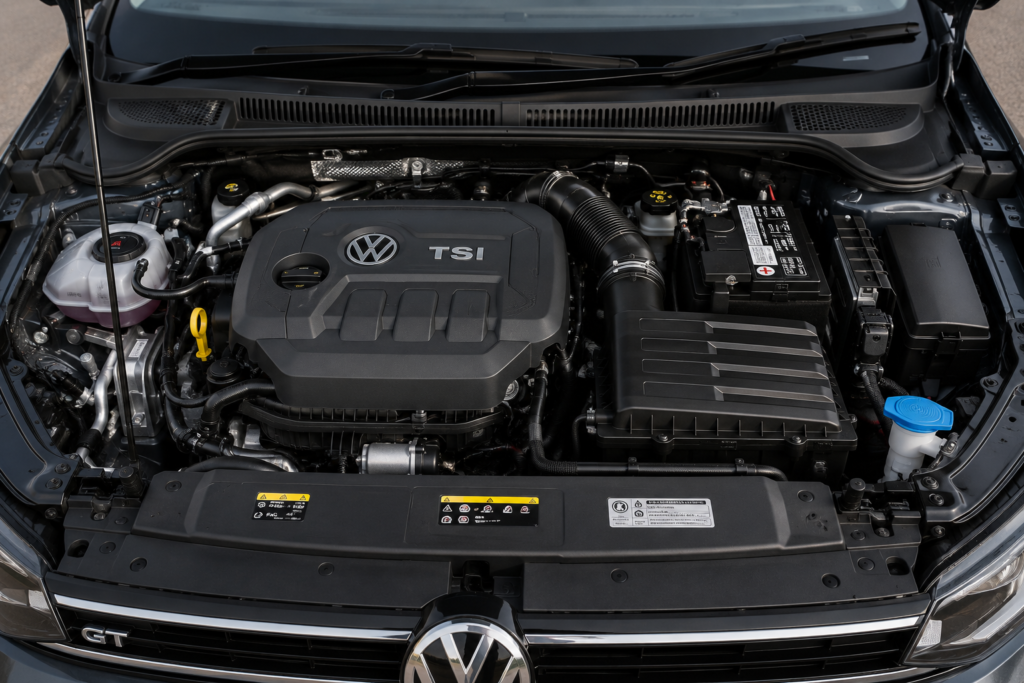
The Virtus is available with two turbo petrol engine options.
| Specification | 1.0L TSI Turbo Petrol | 1.5L TSI EVO Turbo Petrol (GT) |
|---|---|---|
| Engine Type | 3-cylinder turbo petrol | 4-cylinder turbo petrol |
| Displacement | 999 cc | 1498 cc |
| Max Power | 115 PS @ 5000–5500 rpm | 150 PS @ 5000–6000 rpm |
| Max Torque | 178 Nm @ 1750–4500 rpm | 250 Nm @ 1600–3500 rpm |
| Transmission Options | 6-speed Manual / 6-speed Automatic (TC) | 7-speed DSG Automatic |
| Drive Character | Smooth city + highway balance | Sporty, performance-focused |
| Turbocharger | Yes | Yes |
| Fuel Type | Petrol | Petrol |
| Claimed Mileage* | ~18.5–20 km/l | ~18–19.5 km/l |
| Cylinder Deactivation | No | Yes (ACT technology) |
| Best For | Daily driving, efficiency | Enthusiasts, highway performance |
| 0–100 km/h (approx.) | ~10.8 sec | ~8.5 sec |
| Gearbox Type | Torque Converter Automatic | Dual-Clutch DSG |
| NVH Refinement | Good | Excellent |
| Performance Feel | Linear and easy-going | Strong mid-range punch |
Which Engine Should You Choose?
- Choose the 1.0 TSI if you want:
- Better value
- Lower running costs
- Comfortable city driving
- Smooth automatic gearbox
- Choose the 1.5 GT TSI if you want:
- Faster acceleration
- Highway touring performance
- Sportier exhaust note and DSG shifts
- Enthusiast driving experience
Ride Quality and Handling
The Virtus offers one of the best driving experiences in the segment.
At low speeds, the suspension absorbs potholes reasonably well. On highways, the sedan feels planted and stable even at triple-digit speeds.
The steering feels precise, which gives drivers confidence during cornering. Compared to softer sedans, the Virtus feels more connected to the road.
This balance between comfort and sportiness is one of the biggest reasons enthusiasts prefer Volkswagen cars.
Volkswagen Virtus Safety Features
Safety is another strong area for the Virtus.
Volkswagen has built the sedan using a strong platform, and the car feels structurally solid.
Safety Features
| Safety Feature | Details |
|---|---|
| Global NCAP Rating | 5-Star Adult & Child Occupant Protection |
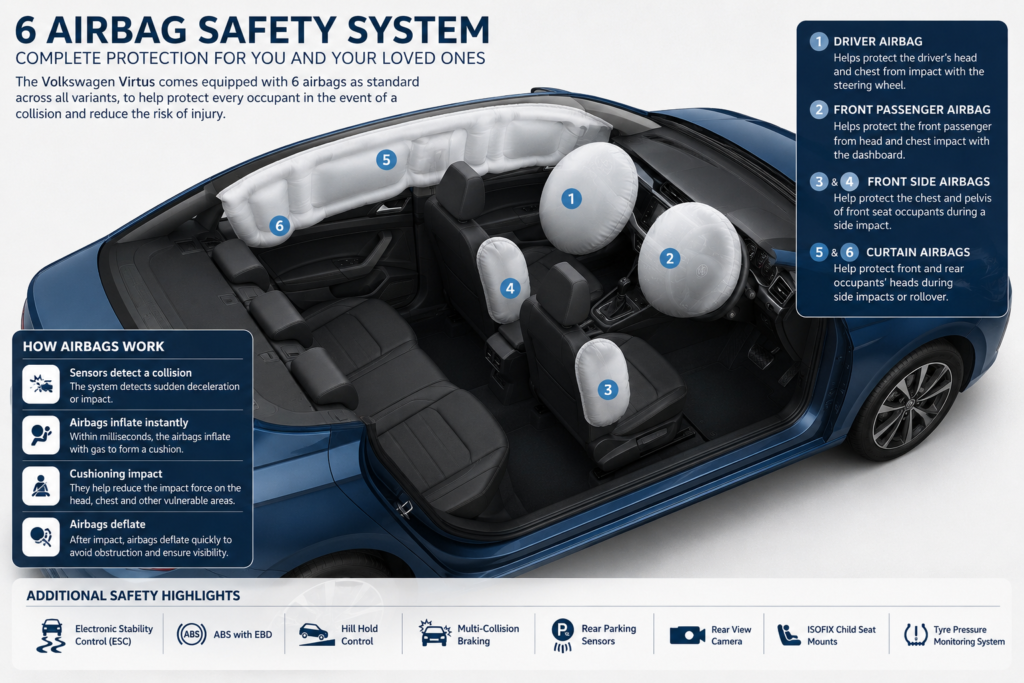
| Airbags | 6 airbags standard across variants |
| Electronic Stability Control (ESC) | Standard safety stability system |
| ABS with EBD | Anti-lock braking with brake-force distribution |
| Multi-Collision Brakes | Automatically brakes after impact |
| Hill Hold Control | Prevents rollback on inclines |
| Traction Control System | Improves grip during acceleration |
| Rear Parking Camera | Assists in reverse parking |
| Park Distance Control | Rear parking sensors |
| ISOFIX Child Seat Mounts | Standard child seat anchors |
| Tyre Pressure Deflation Warning | Alerts low tyre pressure |
| Seat Belt Reminder | Front and rear reminders |
| Speed Sensing Door Locks | Automatic locking while driving |
| Electronic Differential Lock (EDL) | Better traction during cornering |
| Brake Assist System | Extra braking force during emergencies |
| Engine Immobilizer | Anti-theft protection |
| Rear Fog Lamps | Better visibility in fog |
| High-strength MQB A0 IN Platform | Reinforced German-engineered structure |
| Crumple Zones | Designed to absorb crash energy |
| Three-point Seatbelts | All seating positions |
| Reverse Parking Sensors | Parking assistance |
| Automatic Hazard Lights | Activates during emergency braking |
The Virtus has also performed well in crash safety evaluations, making it a reassuring family sedan.
Volkswagen Virtus Variants
The Virtus is available in multiple variants catering to different buyers.
Popular Variants
- Comfortline
- Highline
- Topline
- GT Line
- GT Plus
The Comfortline variant is suitable for budget-conscious buyers, while the GT Plus is ideal for driving enthusiasts looking for maximum performance and premium features.
Volkswagen Virtus Price in India
Expected Price Range (Ex-Showroom)
| Variant | Price Range |
|---|---|
| Comfortline | ₹11.5 – ₹12.5 Lakh |
| Highline | ₹13 – ₹14.5 Lakh |
| Topline | ₹15 – ₹16.5 Lakh |
| GT Plus DSG | ₹18 – ₹19 Lakh |
Prices may vary depending on city, optional accessories, and dealership offers.
Volkswagen Virtus Mileage
Fuel efficiency remains an important factor for Indian buyers.
Claimed Mileage
| Engine | Mileage |
|---|---|
| 1.0 TSI Manual | 20+ km/l |
| 1.0 TSI Automatic | 18-19 km/l |
| 1.5 GT DSG | 18+ km/l |
Real-world mileage depends on driving style and traffic conditions.
Volkswagen Virtus vs Rivals
| Specification | Volkswagen Virtus | Honda City | Hyundai Verna | Skoda Slavia | Maruti Suzuki Ciaz |
|---|---|---|---|---|---|
| Segment | Mid-size Sedan | Mid-size Sedan | Mid-size Sedan | Mid-size Sedan | Mid-size Sedan |
| Engine Options | 1.0 TSI / 1.5 TSI | 1.5 NA Petrol / Hybrid | 1.5 NA / 1.5 Turbo | 1.0 TSI / 1.5 TSI | 1.5 NA Petrol |
| Max Power | 150 PS | 126 PS | 160 PS | 150 PS | 105 PS |
| Max Torque | 250 Nm | 145 Nm | 253 Nm | 250 Nm | 138 Nm |
| Transmission Options | MT / AT / DSG | MT / CVT / e-CVT | MT / IVT / DCT | MT / AT / DSG | MT / AT |
| Mileage (Approx.) | 18–20 km/l | 17–27 km/l | 18–20 km/l | 18–20 km/l | 20–21 km/l |
| Boot Space | 521 L | 506 L | 528 L | 521 L | 510 L |
| Ground Clearance | 179 mm | 165 mm | 165 mm | 179 mm | 170 mm |
| Safety Rating | 5-Star Global NCAP | ASEAN NCAP 5-Star | Not Yet Tested | 5-Star Global NCAP | Not Yet Tested |
| Airbags | 6 Standard | Up to 6 | 6 Standard | 6 Standard | Up to 4 |
| ADAS Features | No | Honda Sensing | Level-2 ADAS | No | No |
| Best Strength | German driving feel | Reliability & comfort | Tech & performance | Virtus twin sibling | Efficiency & comfort |
| Starting Price (Approx.) | ₹11.5 lakh | ₹12 lakh | ₹11 lakh | ₹10.7 lakh | ₹9.4 lakh |
Volkswagen Virtus
- Best balance of performance, safety, and driving dynamics
- Strong German build quality
- Excellent highway stability
Honda City
- Known for comfort and long-term reliability
- Hybrid version offers exceptional fuel economy
- Spacious rear seat comfort
Hyundai Verna
- Most feature-loaded sedan in the segment
- Powerful turbo petrol engine
- Advanced Level-2 ADAS features
Skoda Slavia
- Shares platform and engines with Virtus
- Similar driving dynamics
- Slightly softer suspension tuning
Maruti Suzuki Ciaz
- Most affordable and fuel-efficient option
- Lower maintenance costs
- Older platform compared to rivals
The Virtus stands out mainly because of its German driving dynamics and turbocharged performance.
Pros and Cons
Pros
- Excellent driving experience
- Powerful turbo petrol engines
- Premium European styling
- Spacious cabin and large boot
- Strong highway stability
- Good safety package
Cons
- Rear headroom slightly limited for very tall passengers
- DSG maintenance can be expensive long term
- Some rivals offer more features
Is Volkswagen Virtus Worth Buying in 2026?
If you love driving and want a premium sedan experience, the Volkswagen Virtus is absolutely worth considering.
It combines performance, comfort, safety, technology, and practicality better than most sedans in its segment. The GT variant especially delivers an engaging driving experience that is becoming rare in modern mass-market cars.
For buyers looking for a sedan that feels premium, mature, and enjoyable every single day, the Virtus remains one of the best choices in India.
Final Verdict
The Volkswagen Virtus is proof that sedans still have a strong place in the Indian automotive market.
It may not have the SUV stance many buyers prefer today, but it delivers something equally important — genuine driving pleasure combined with practicality.
Whether you choose the efficient 1.0 TSI or the exciting 1.5 GT DSG, the Virtus offers a refined and premium ownership experience that few competitors can truly match.
Frequently Asked Questions (FAQ)
Is Volkswagen Virtus a good family car?
Yes, the Virtus offers excellent rear seat comfort, safety features, and a spacious boot, making it suitable for families.
Which Volkswagen Virtus engine is best?
The 1.5 TSI GT engine is best for enthusiasts, while the 1.0 TSI is ideal for balanced city and highway usage.
What is the mileage of Volkswagen Virtus?
The Virtus delivers around 18-20 km/l depending on the engine and driving conditions.
Is Volkswagen Virtus safer than rivals?
The Virtus offers strong build quality, six airbags, ESC, and advanced safety systems, making it one of the safer sedans in the segment.
Is Virtus better than Verna?
The Virtus focuses more on driving dynamics and stability, while the Verna offers more futuristic features.
Check out full detailed review of Toyota Corolla – Toyota Corolla 2026
Check out full detailed review of Suzuki Fronx – Suzuki Fronx 2026
Check out full detailed review of Honda Civic – Honda Civic 2026
Check out all Volkswagen Cars, Sedans & SUV’s – Click here